ENEMY DESIGN
Enemy design within the team project.
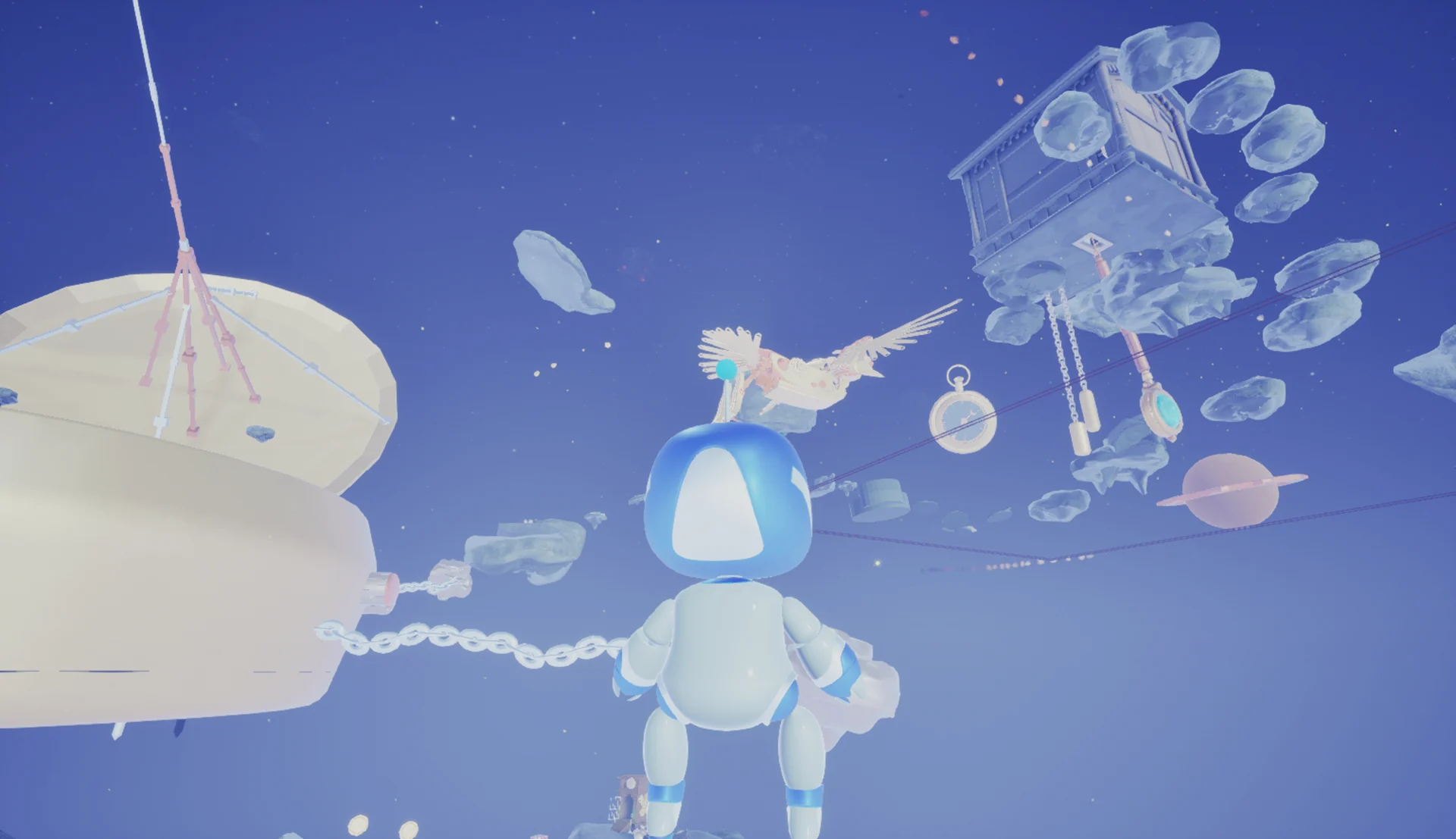
A team vertical slice inspired by Sony’s Astro Bot, with my focus on enemy, Boss and puzzle design.
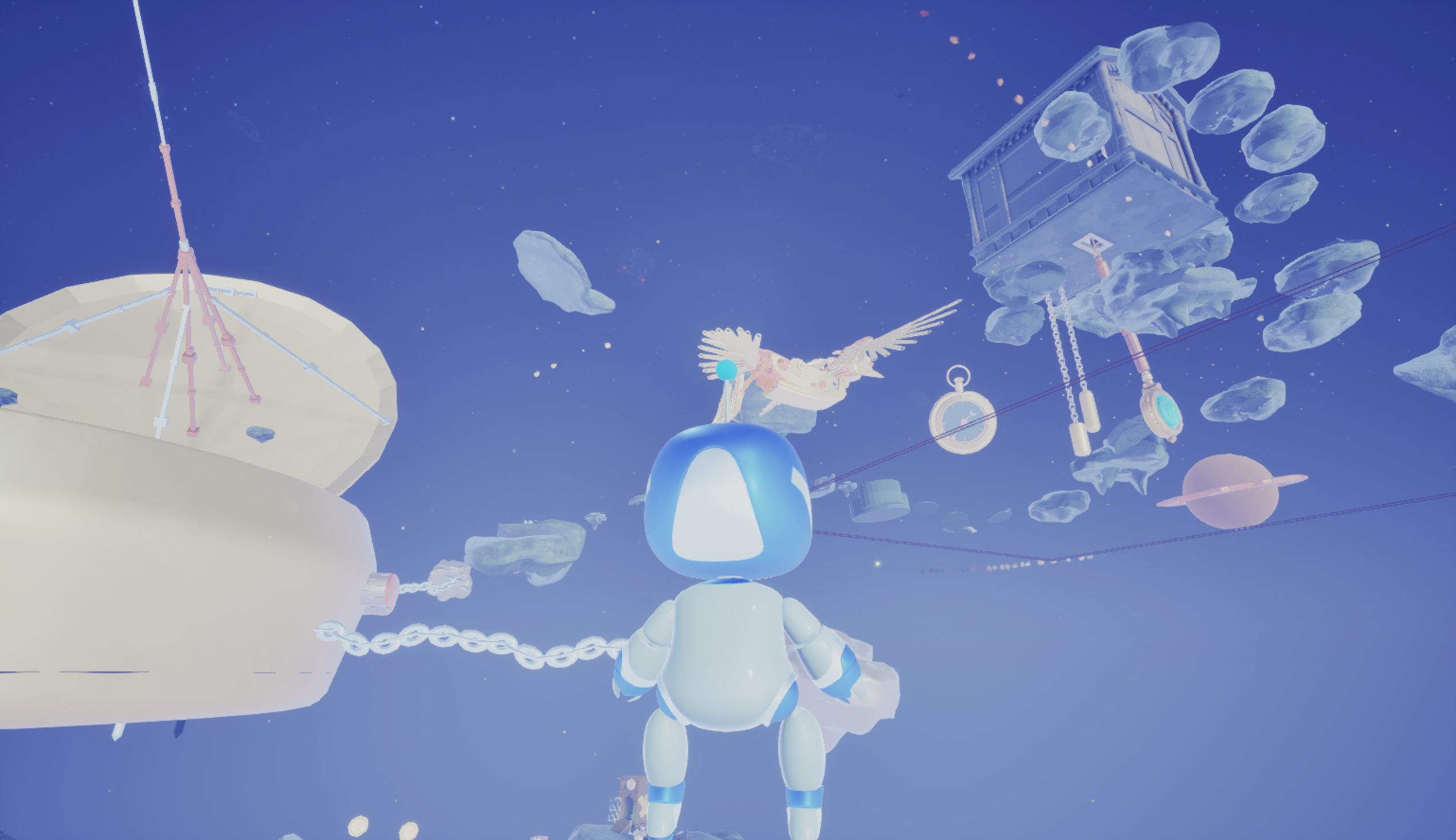
Journeyman is a team-built vertical slice studying and recreating aspects of Astro Bot.
My role covered enemy and Boss design, puzzle design, animation requirements and AI visual references. I initially proposed five enemies and two bosses; some designs were later cut as scope changed. Programming, art and animation assets were created by the team.
Enemy design within the team project.
Puzzle design within the vertical slice.
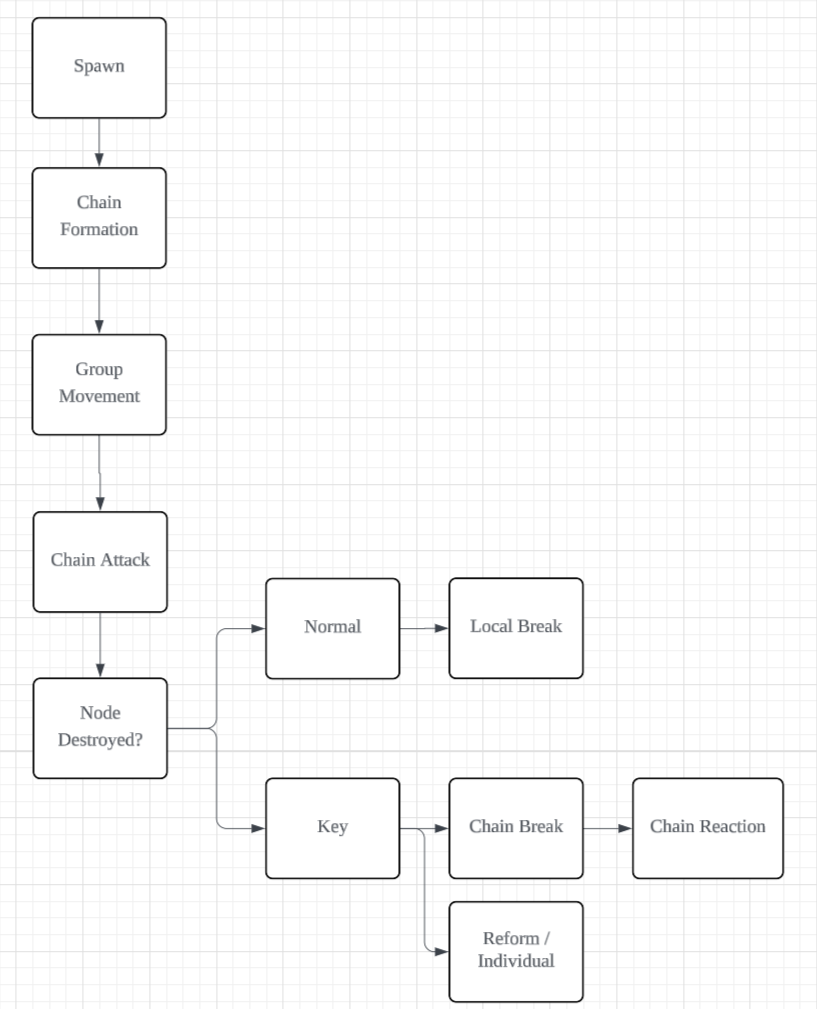
Node Swarm is built around node colour and connection rules. Connecting nodes of the same colour triggers chain explosions; connecting different colours does not.
I documented the connection and explosion conditions in a behaviour diagram. The gameplay screenshot shows the team-built enemy in the level.
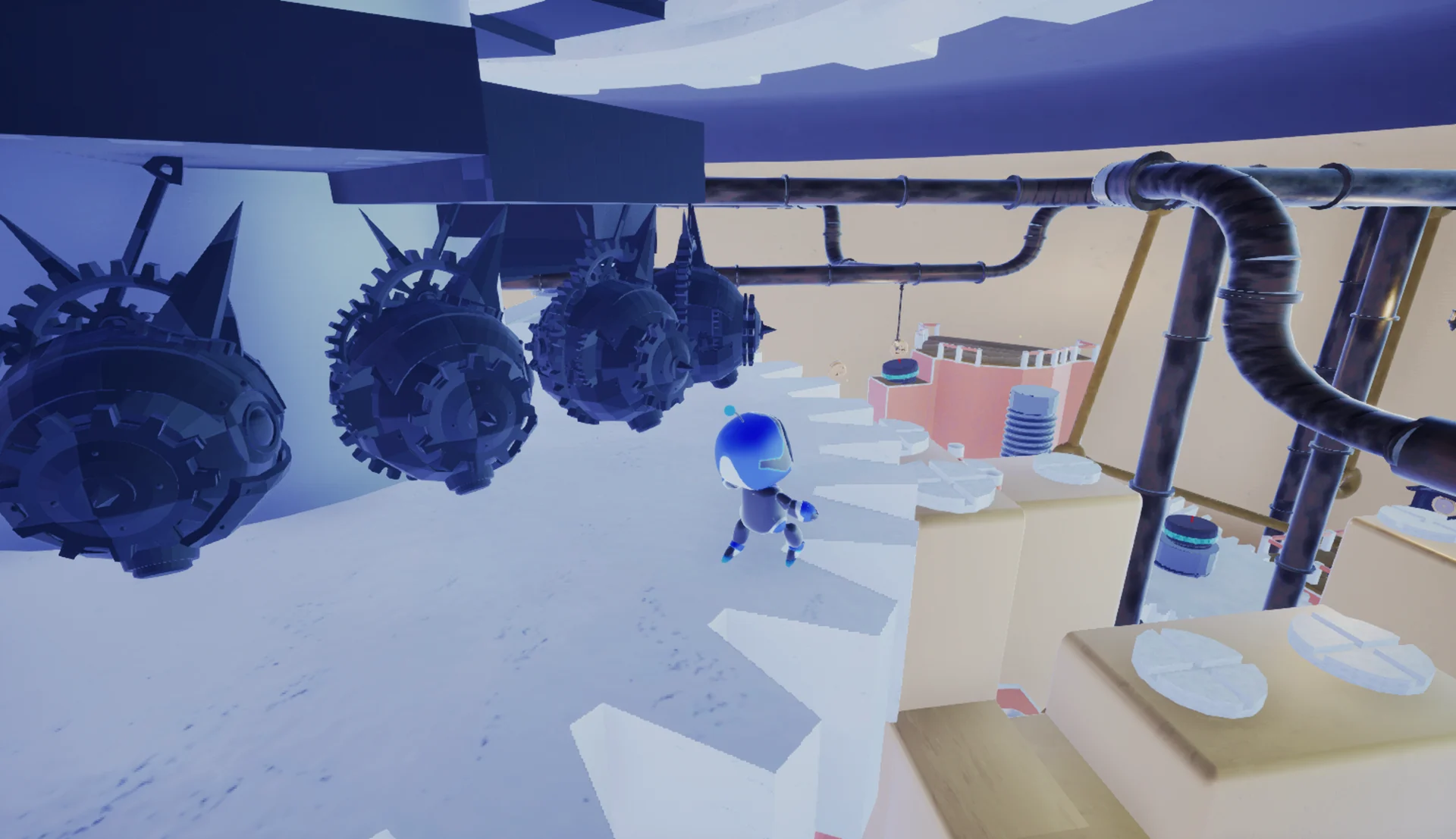
The behaviour diagram brings node colours, connections and explosion triggers into one reference for programming.
This documents my enemy-rule design. The final programming and game art were produced by the team.
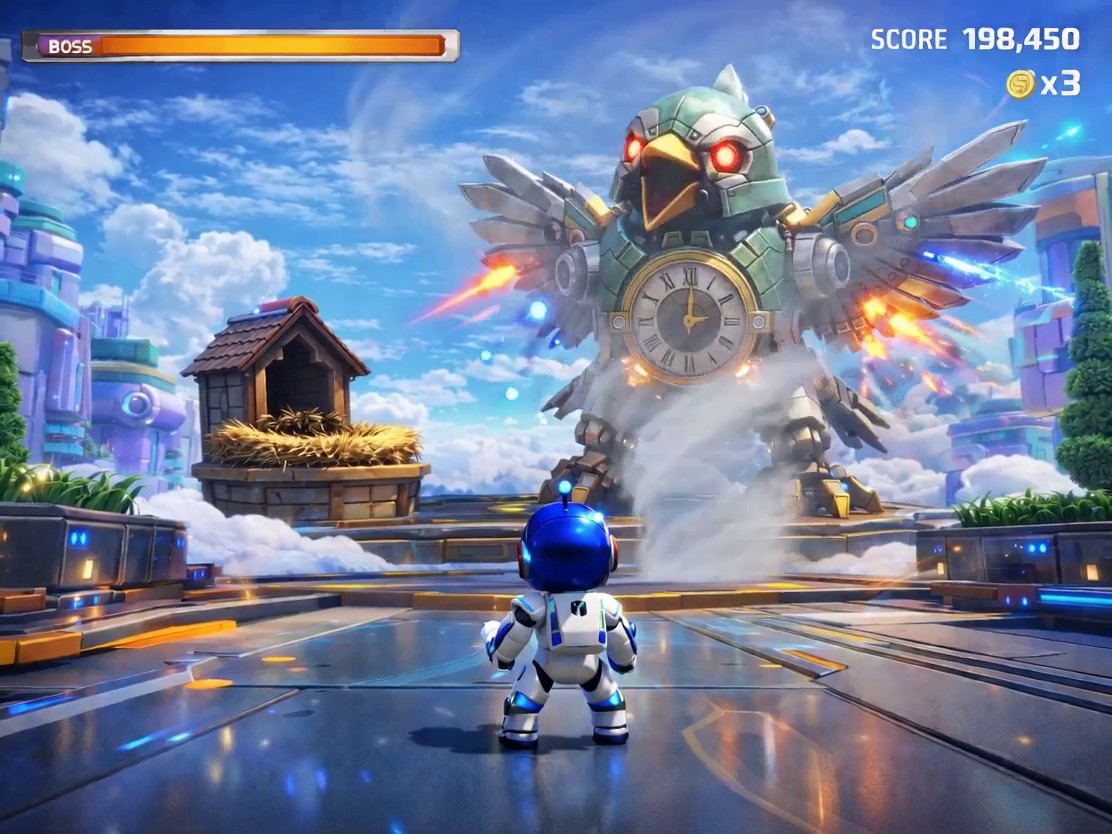
The revised Boss design follows a cycle of two small orbiting tornadoes and one large straight tornado, followed by an energy-depletion state.
During this window, the player pulls the Boss to the ground and attacks. Three successful attacks are the design win condition, separating the avoidance phase from the counterattack phase.
The initial scope proposed five enemies and two bosses; some content was later cut. This section presents the revised design rules, with a Seedance 2.0 behaviour-reference frame.
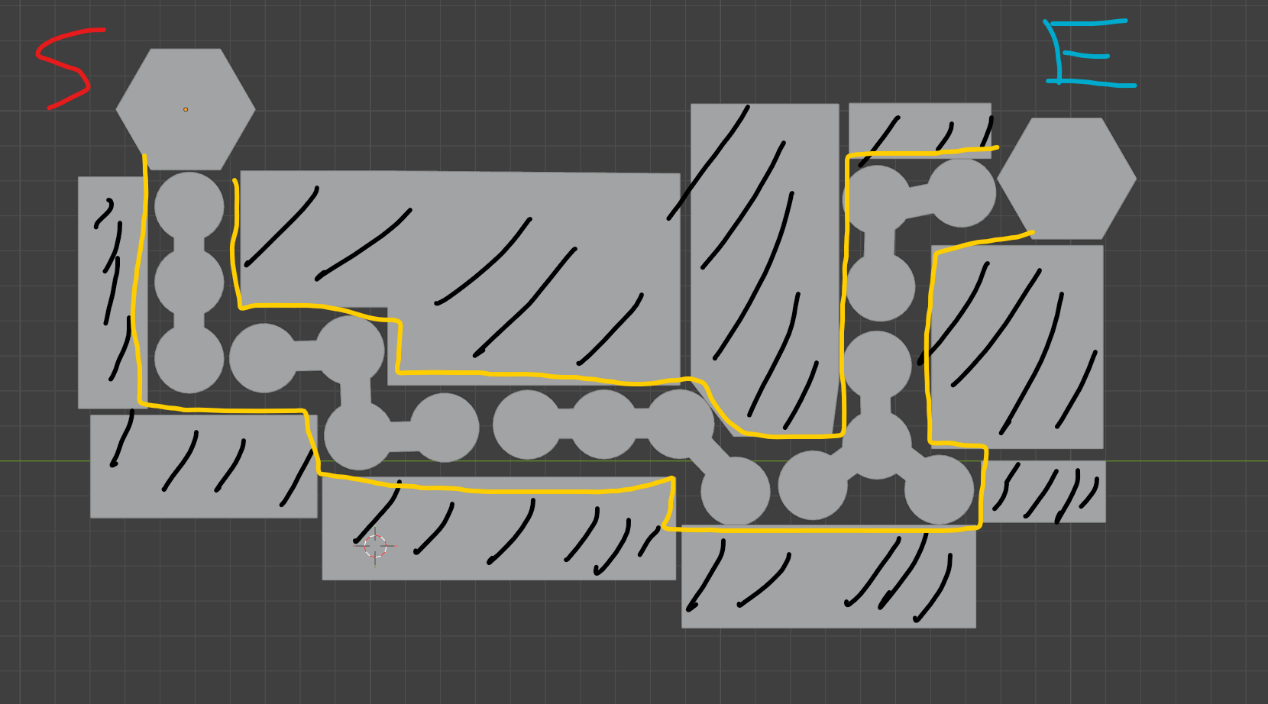
Large start and end gears define the goal. The player places and rotates five gear types so that meshing teeth transfer power across the route.
The five shapes are straight, small L, three-way, long L and Z. Valid and blocked areas constrain placement around a single intended solution.
Players collect the gears into an inventory before switching to a close panel view. This separates collection from placement and reduces environmental occlusion during manipulation.
I compiled animation requirements for enemies, bosses, the player and NPCs, and used Seedance 2.0 Boss videos to explain attack timing and interactions to programmers.
The material helped programming, art and animation members understand the design. My contribution was mechanics, enemy, Boss and puzzle design, plus production handoff; programming, art and final animation assets were produced by the team.